
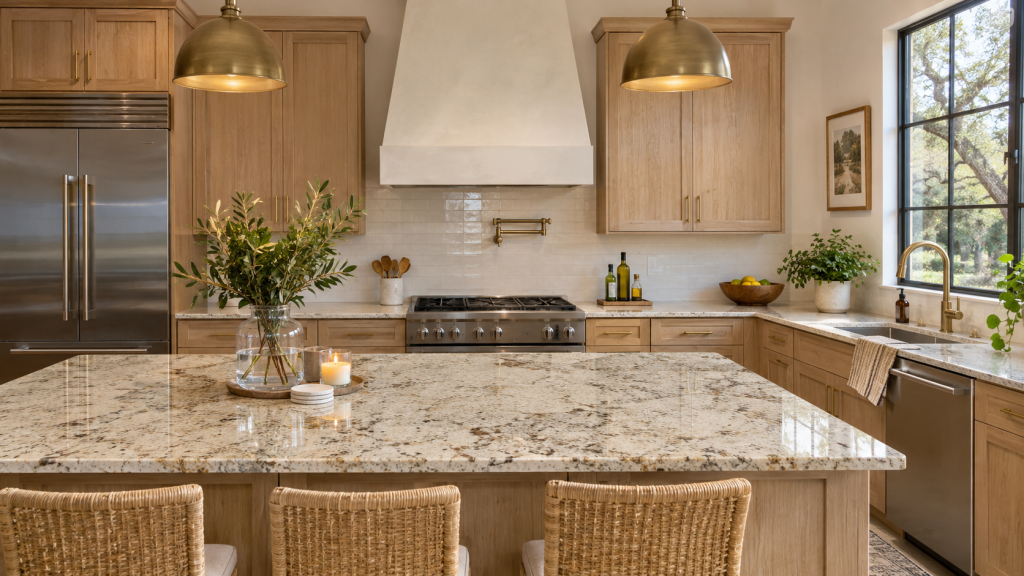
Granite still belongs among the popular countertop materials 2026 homeowners are considering, particularly if you want natural stone with its own mineral pattern. Its share of renovation choices has declined, but that doesn’t tell you whether it fits your kitchen.
The useful question is how the actual slab looks beside your cabinets and what it asks of you each day. Start there, and you can judge granite with confidence before committing to a surface you’ll see every morning.
Where Granite Fits Among Popular Countertop Materials in 2026
Granite remains a common choice for kitchen counters, though it no longer leads the survey figures. In the 2026 U.S. Houzz Kitchen Trends Study, 15% of homeowners upgrading countertops chose granite, compared with 19% in the previous study. Engineered quartz led at 32%.
Those figures describe the group in the study. They don’t measure every counter sold in the country or tell you what your neighbors prefer.
For your project, that context helps. Granite doesn’t need to be gaining share to offer the appearance and performance you want. Equally, its popularity alone isn’t a reason to choose it.
When reviewing the popular countertop materials 2026 renovation guides recommend, keep your own priorities close. You might want stone with a pattern that changes across the island. Or you may like one slab enough to take on its care.
Granite gives you those choices, with a surface that holds up well to daily kitchen use. The choice becomes clearer once you compare real slabs against the same kitchen plan.
An old kitchen photo may show granite, but it also shows the cabinets and lights chosen at that time. Looking at the stone separately helps you decide which parts of that older design you actually dislike.
The Slab and the Room Matter More Than the Label
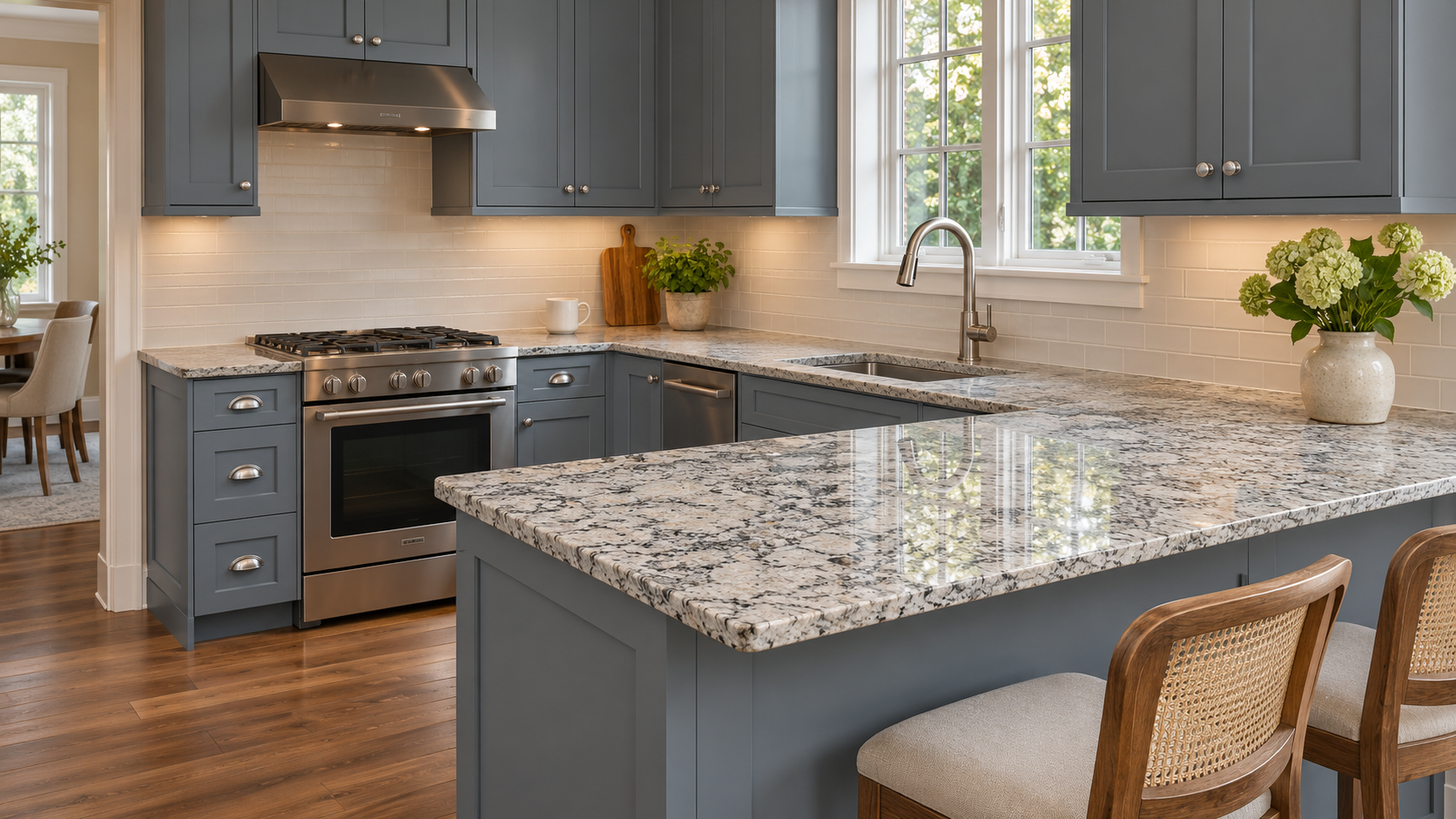
Granite ranges from finely patterned stone to slabs with broad bands of movement. A small sample can hide that difference, particularly when you’re trying to imagine a long counter run.
Begin with the finish you plan to keep. If your cabinets have warm wood grain, compare that warmth with the granite’s background rather than matching a single dark fleck.
Check the Color Beside Your Cabinets
A creamy slab can sit comfortably above oak, while a cooler gray background may suit painted cabinetry. Neither pairing works automatically; the actual undertones decide how the two surfaces relate.
Take the cabinet sample to the stone. Hold them beside each other, then step back far enough to see the combination as part of a room.
If you’re deciding between a pale and dark direction, our black versus white granite comparison shows how each changes the finished kitchen.
Give Strong Movement Enough Space
A slab with sweeping mineral bands may work well as the main feature of an island. Nearby patterned tile can compete with that movement, especially when both patterns have a similar scale.
Quieter granite gives detailed cabinetry more room to stand out. That lets both parts of the room hold your eye, without too much detail in one view.
Before approving a slab, check:
- The full pattern: Look beyond the sample to see where large mineral clusters or bands appear.
- The planned cuts: Ask how the pattern could sit around the sink and across separate counter runs.
- The surrounding finishes: Bring backsplash references so you can judge how much movement the room already contains.
- The light: Compare reflection and color under lighting similar to what you’ll use at home.
These checks help you choose the granite you’ll enjoy in the finished room, rather than the slab that looks strongest on its own.
What Granite Asks of You in a Working Kitchen
Granite resists most daily scratches and handles heat well, which makes it a sound choice for a working kitchen. You’ll still want to protect the surface as you cook.
Use a cutting board as you prepare food. Keep trivets where you set down hot cookware, since concentrated heat can stress stone and affect treatments.
The Natural Stone Institute’s care guidance recommends heat protection even for stones that withstand warmth. A trivet is a small habit compared with repairing a damaged finish.
Sealing depends on the stone: Some granite absorbs more readily than others. Ask which sealer suits the chosen slab, what has already been applied, and how to assess future needs.
Spills still need care: The right penetrating sealer helps slow the way spills soak in, but it doesn’t make the counter stain proof. Blot spills promptly and use cleaners made for the stone.
Edges need care, too: A hard knock from a pan can chip an exposed corner. Include those corners in your design review rather than treating the slab’s hardness as protection against every accident.
Our guide to sealing granite countertops explains why the right routine starts with the actual surface, rather than an automatic yearly treatment.
Granite may fit your household if you value a particular natural pattern and are comfortable checking its care needs. You don’t need an elaborate cleaning routine, but you do need guidance that matches the stone.
Compare Granite With Alternatives on the Same Terms
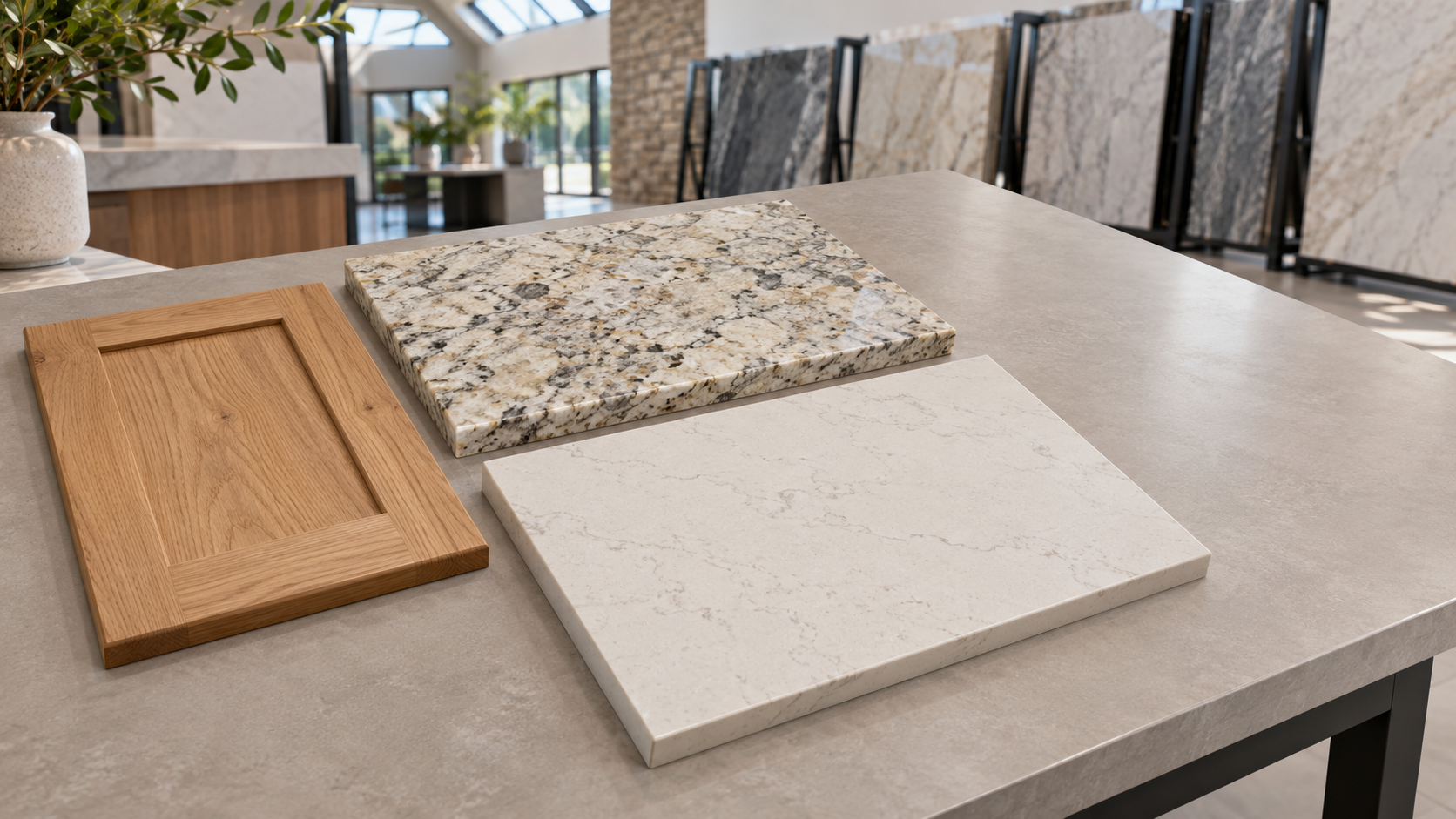
The most useful comparison starts with what you want to avoid doing after installation.
If you don’t want a sealing task, engineered quartz is worth a look. It doesn’t need sealing, but you’ll still need to clean it as directed and keep hot pans off it.
If you love marble’s softer veining, consider how you feel about acid etching. Granite tends to resist common kitchen acids better, though the chosen stone still needs proper care.
You can compare granite and quartz for your kitchen without assuming one category always looks better or costs less.
Keep the same details in each quote so you can compare the work fairly:
- Material and finish: Name the actual granite slab or quartz design so you know which surface the price covers.
- Edge and sink work: Compare the same edge shape and sink cutouts.
- Slab count: Ask how the layout and pattern affect how much stone you’ll need.
- Included work: Check whether removal and other preparation appear in the scope.
A lower price tells you less when it covers a different finished counter. Matching the details lets you decide whether a price difference reflects the stone you prefer or a change in the work.
It also gives you a useful stopping point. Once you understand the complete scope and care, you can choose without reopening every material category.
Compare Granite Slabs for the Kitchen You Are Planning
Bring the cabinet finish you’ve chosen, along with clear kitchen photos, to Bellezza Artisan Stone Surfaces in San Antonio. Add a rough layout if you have one, so the discussion can include where the strongest movement will appear.
We can discuss the stone alongside your design and care expectations before those choices move into fabrication. You don’t need to arrive with every detail settled.
Explore our granite countertops in San Antonio, then arrange a consultation to compare granite for your kitchen. Use that conversation to narrow the stone choice and agree on which details you still need for a clear quote.
Frequently Asked Questions
Is Granite Going Out of Style in 2026?
Granite remains widely selected, although its share declined in the 2026 Houzz kitchen study. Whether it looks current in your home depends on the slab and surrounding finishes. Compare the actual pattern with your cabinetry before judging the material from an older kitchen photograph.
Does Granite Need to Be Sealed Every Year?
Not always. Sealing needs vary with the stone, its existing treatment, and the product used. Follow the care guidance for your installed surface, and check changes in absorption before applying more sealer. Some dense stones need little additional treatment.
Is Granite Better Than Quartz for a Busy Kitchen?
Either can suit a busy kitchen. Granite offers natural variation, while engineered quartz removes the sealing task. Both need prompt cleanup and heat protection. Choose based on the actual material you prefer and the care habits you’re comfortable maintaining.
Will Granite Countertops Increase My Home’s Value?
Granite doesn’t guarantee a higher sale price. A well-maintained counter that suits the overall kitchen may appeal to buyers, but the home’s condition and local market also matter. Choose a material that works for your use rather than relying on a promised return.