
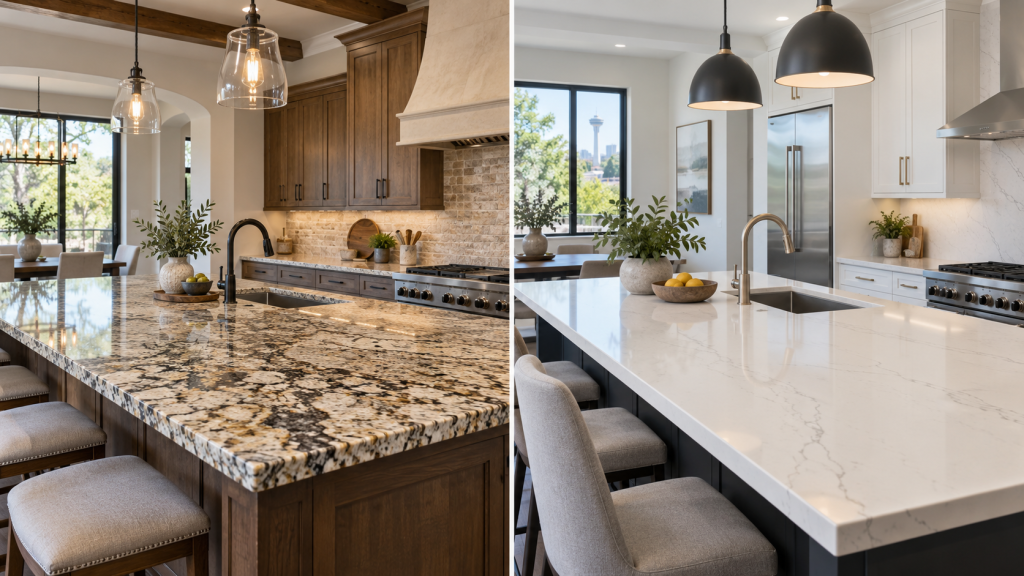
Granite fits homeowners who want a natural slab with individual movement and stronger heat tolerance. Quartz fits homeowners who prefer consistent patterns, simple stain care, and no sealing. Both can serve a busy kitchen, but they ask for different habits. The right choice depends on how you cook, how much variation you want, and where the surface will sit. This granite vs. quartz countertops San Antonio guide compares those decisions before you commit to a material.
Granite and Quartz Are Made Differently, and That Changes the Experience
Granite is quarried from the earth and cut into slabs. Its minerals create patterns that change across the surface, so the piece you select is the piece you receive. Small samples cannot show the full movement, concentrated color, or quiet areas within the slab.
Quartz is an engineered surface made with quartz minerals, pigments, and resin binders. Manufacturers control its color and pattern, which makes the appearance more predictable across a kitchen. Product quality, finish, design, and warranty can still differ by manufacturer.
Quartz is also different from quartzite. Quartzite is natural stone and has its own performance and care needs.
The manufacturing difference affects more than appearance. Granite may require sealing and generally handles heat better. Quartz does not need sealing, but direct high heat can damage or discolor the resin.
Choose Granite or Quartz Based on How Your Kitchen Works
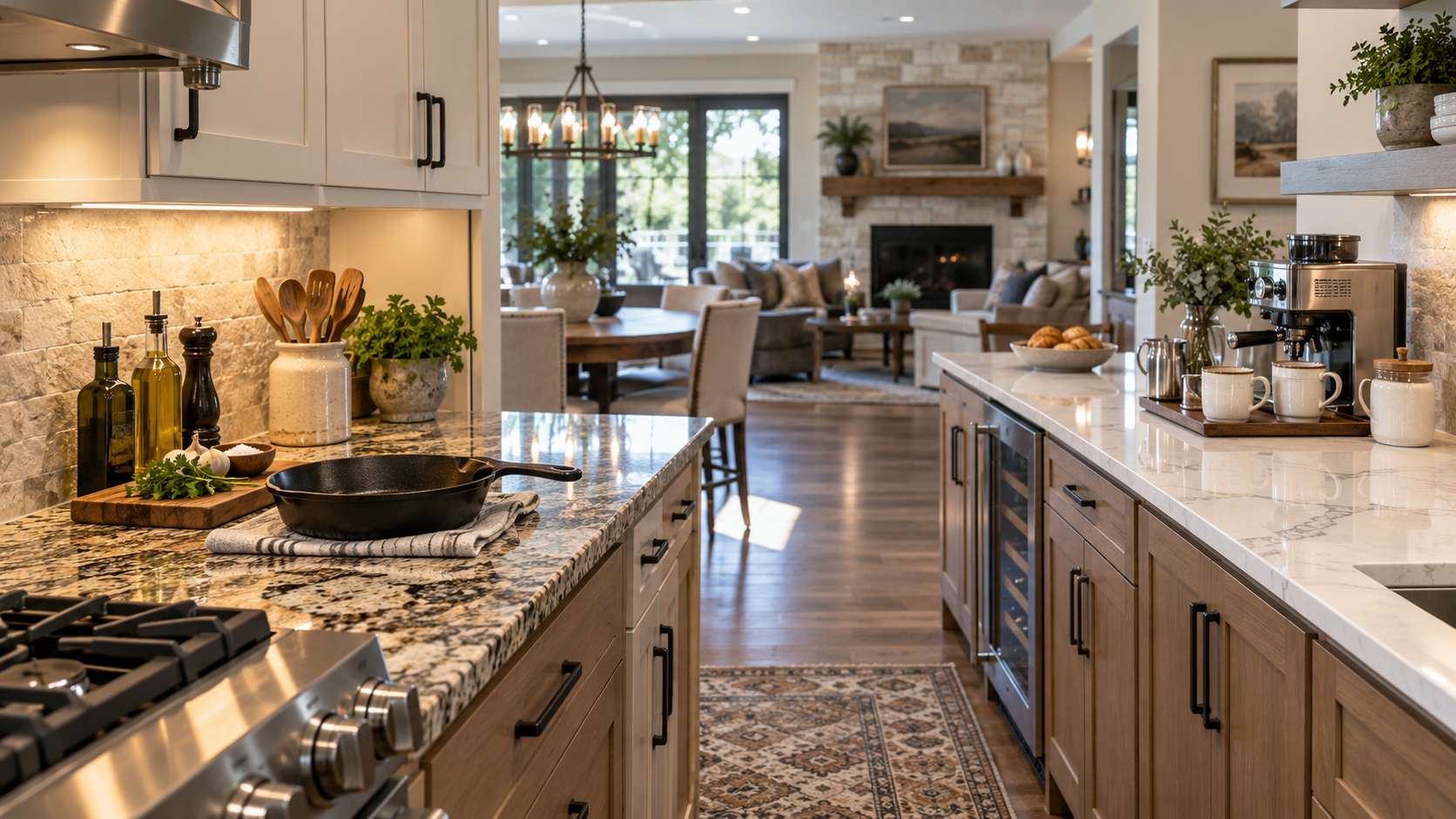
Start with your habits. A homeowner who moves cookware straight from the range has different priorities than someone who cares most about quick cleanup and controlled patterning.
Granite handles normal kitchen heat well. Trivets remain the right habit because they protect the sealer and reduce sudden temperature stress. Quartz needs more heat caution. A hot pan can scorch or discolor the resin, so trivets and hot pads should stay within reach.
Quartz is nonporous and does not require sealing. Coffee, oil, and wine stay on the surface longer instead of absorbing quickly, although spills should still be cleaned promptly.
Granite is porous. A suitable sealer slows absorption and supports stain resistance. Sealing frequency depends on the specific stone, finish, product, and use.
Both materials resist normal scratches, but neither is immune to damage. Heavy impact can chip an exposed edge. Harsh cleaners can dull or affect the finish. A cutting board protects the counter and keeps knife blades from wearing down.
Compare heat and stain resistant countertop options for San Antonio homes.
The Better Design Choice Depends on Variation, Light, and Layout
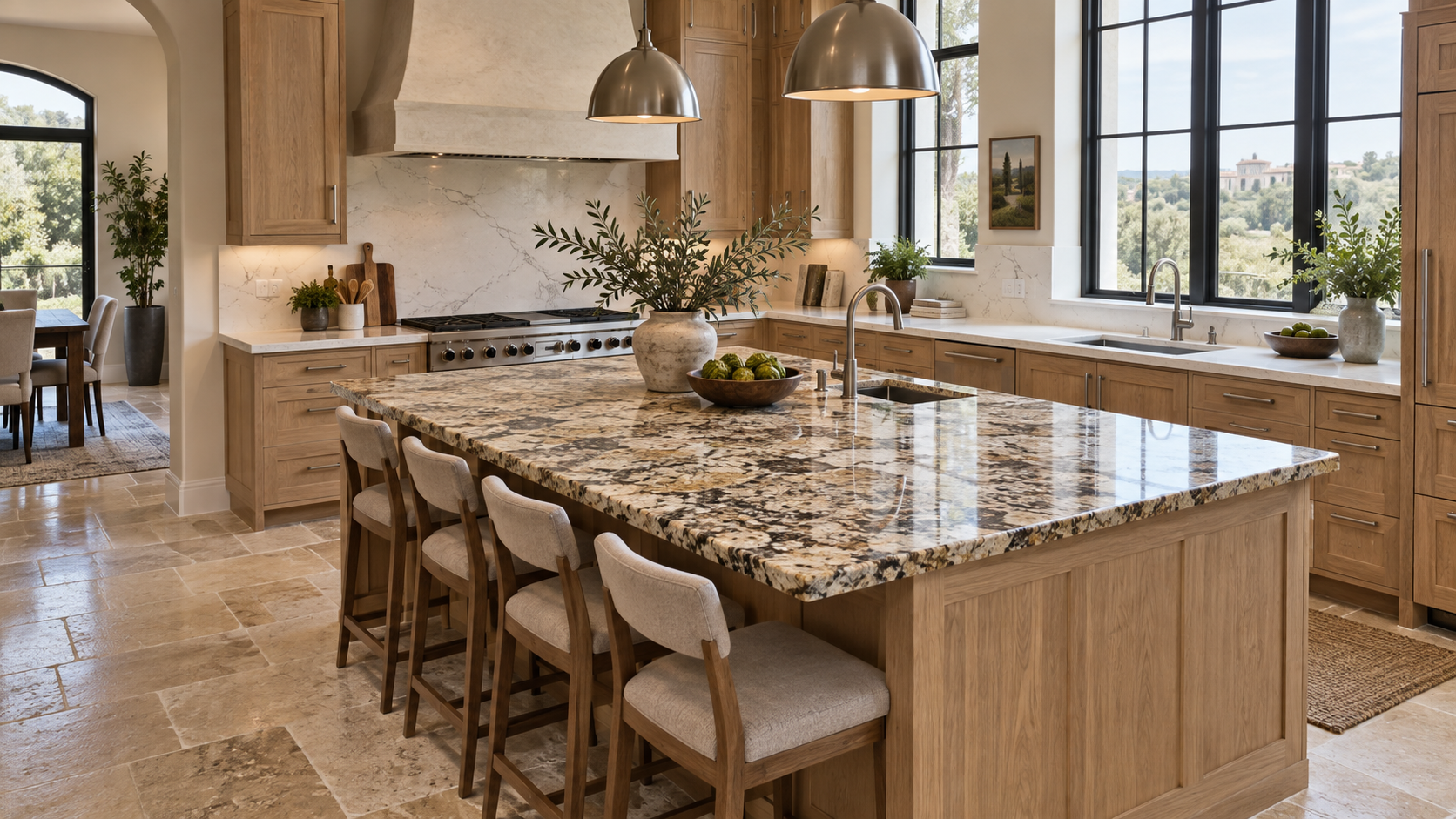
Granite gives you mineral depth, irregular movement, and shifts in color that cannot be repeated on demand. It works well when the countertop should feel connected to the material itself. A strong slab can carry a large island, while a quieter granite can support wood cabinetry without taking over the room.
Quartz gives you more control. Consistent patterning helps when perimeter counters, an island, and a backsplash need to read as one plan. It can also make seam matching more predictable, although seams remain visible at close range.
San Antonio light matters. Large windows and bright afternoon sun can reveal undertones that a showroom sample hides. View the full slab beside your cabinet finish, flooring, and hardware whenever possible.
Layout matters too. Ask how movement will turn at corners, where seams may fall, and which part of the slab will cover the island. With either material, good design depends on the relationship between the surface and the room around it.
Cost, Installation, and Long Term Value
Granite and quartz often occupy overlapping price ranges. Common granite patterns may cost less than premium quartz, while rare granite can cost more than many engineered options. Brand, slab availability, thickness, finish, edge profile, cutouts, and layout all affect the installed price.
Compare quotes using the exact products you would buy. A broad category estimate cannot tell you whether a specific granite slab and quartz color will land at the same price.
Both materials require accurate templating and professional fabrication. Granite layout must account for natural movement and slab yield. Quartz layout must account for pattern direction, slab size, and manufacturer requirements. Large islands, long overhangs, sink cutouts, and waterfall ends can add material or support needs.
Long term value comes from fit. Granite may reward a buyer who wants real stone and accepts periodic care. Quartz may serve a household that values consistent appearance and no sealing. The surface that matches your use is less likely to feel like a compromise later.
Use This Decision Test Before You Choose
Choose granite when the individuality of the slab matters most, your kitchen sees regular heat, and periodic sealing feels manageable. Choose quartz when you want a controlled pattern, simple stain care, and no sealing.
Keep quartz indoors. Sustained UV exposure can yellow or discolor its resin, and standard manufacturer warranties generally exclude outdoor installation. For an outdoor kitchen, compare properly specified granite, quartzite, or porcelain with your fabricator.
Before deciding, answer five questions:
- Do you want natural movement or a more repeatable pattern?
- How often does hot cookware reach the counter?
- Are you comfortable checking whether granite needs resealing?
- Will the surface receive direct sun or sit outdoors?
- Should the countertop lead the room or support the other finishes?
Bring those answers, along with cabinet samples or plans, to Bellezza. We can help you compare full slabs in our San Antonio showroom and understand how each option will work after fabrication. Explore our granite countertops and quartz countertops before your consultation.
Frequently Asked Questions
What Is the Main Difference Between Granite and Quartz Countertops?
Granite is natural stone cut from a quarried slab. Its mineral pattern, color, and movement vary across every piece. Quartz is an engineered surface made with quartz minerals, pigments, and resin, so manufacturers can create more consistent designs.
That difference affects ownership. Granite may need periodic sealing and generally handles heat better. Quartz does not require sealing and offers strong stain resistance, but direct high heat can damage its resin. Your preference for natural variation or controlled consistency often decides the choice.
Is Granite or Quartz Better for a Busy Kitchen?
Both work well in busy kitchens. Granite suits cooks who value stronger heat tolerance and the character of natural stone. Quartz suits households that want no sealing and easier stain management.
Daily habits still matter. Use cutting boards on both materials. Clean spills promptly. Keep trivets under hot cookware, especially on quartz. Protect exposed edges from heavy impact. The better option is the one whose care requirements already match how your household uses the kitchen.
Which Handles Heat Better, Granite or Quartz?
Granite generally handles heat better because it is natural stone. Quartz contains resin binders that can scorch or discolor after contact with hot cookware.
That does not make granite immune to heat related damage. A very hot pan can affect the sealer, and a sudden temperature change can stress a cold or vulnerable area. Use trivets on both materials. With quartz, treat them as a firm requirement rather than an optional precaution.
Which Stains More Easily, Granite or Quartz?
Quartz usually offers stronger stain resistance because its nonporous surface does not need sealing. Granite can also resist stains well when the stone is properly sealed and spills are cleaned promptly.
Neither surface should hold wine, oil, coffee, or strong pigments for long periods. A worn granite sealer can allow liquids to absorb. Quartz can show discoloration from certain chemicals or prolonged exposure. Mild soap, water, and manufacturer approved cleaners are the safest daily choices.
Does Granite Need More Maintenance Than Quartz?
Granite usually requires one additional task: checking whether the surface still repels liquids and resealing when needed. The schedule varies by slab, finish, sealer, and household use.
Quartz does not require sealing. Routine care for both materials stays simple. Wipe spills promptly, use a mild cleaner, avoid abrasive pads, and protect edges from impact. Quartz reduces maintenance, but it does not remove the need for sensible kitchen habits.
Is Granite or Quartz More Expensive in San Antonio?
Either one can cost more. Standard granite and quartz often overlap, while rare granite slabs and premium quartz designs can move well beyond entry level pricing.
Compare the actual granite slab and quartz product, not broad category averages. Thickness, edge profile, cutouts, project size, seams, backsplash scope, fabrication, and installation all affect the price. A complete quote should define those details so you can compare the finished project rather than two incomplete square foot rates.
Which Material Works Better for a Large Kitchen Island?
Granite works well when the island should feature natural movement and become a one of a kind focal point. Quartz works well when the design needs controlled patterning across a broad surface.
Slab dimensions may decide what is possible without a seam. Review the full slab, island measurements, pattern direction, overhang, support, and seam options before fabrication. Learn how thickness affects granite and quartz countertops.
Can Quartz Countertops Be Used Outdoors in San Antonio?
Engineered quartz is not recommended outdoors. Sustained UV exposure can yellow or discolor the resin binders, and standard manufacturer warranties generally do not cover exterior installation.
For a San Antonio outdoor kitchen, consider granite, quartzite, or properly specified porcelain. Each option has different design, maintenance, fabrication, and installation needs. Review the location’s sun, weather exposure, cabinet structure, and cooking setup with an experienced fabricator before selecting the surface.
Do Granite and Quartz Countertops Have Visible Seams?
Both materials can have visible seams. Slab size, kitchen layout, pattern direction, seam location, adhesive color, and installation quality affect how noticeable they become.
Quartz patterns can be easier to repeat, but a printed vein may still break at a seam. Granite movement can make matching more complex because every slab is different. Ask to review likely seam locations and slab layout before fabrication, especially on large islands or kitchens with long countertop runs.