
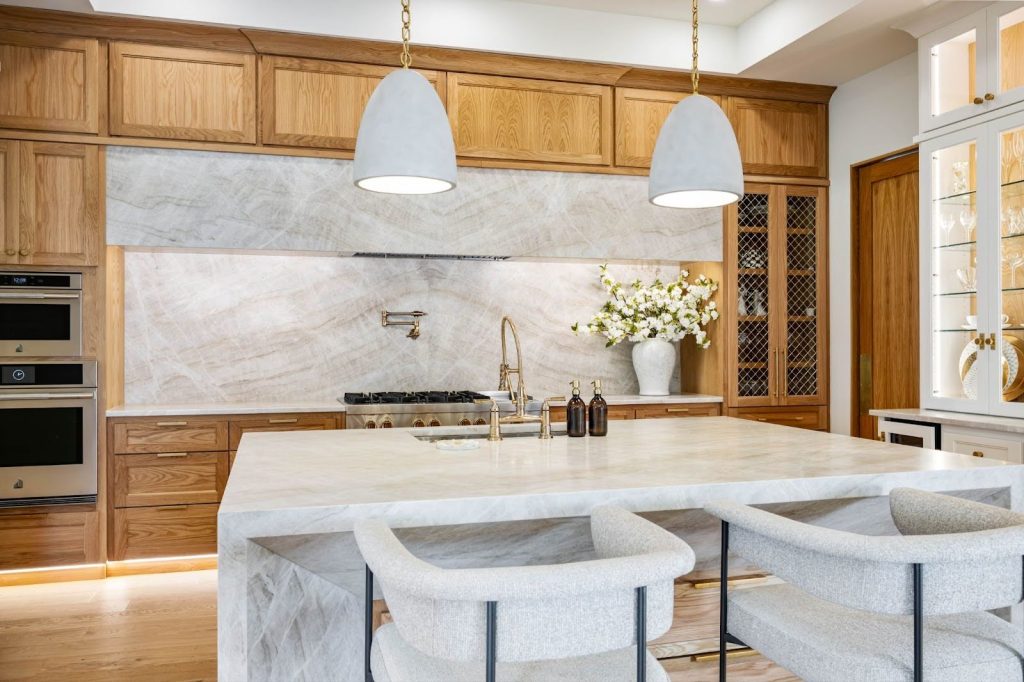
Kitchen islands have become central design elements in modern homes, as they’re functional, beautiful, and expressive. Among the many material choices available, quartzite has become a popular option for homeowners who want their island to serve as a work surface and the focal point of their kitchen.
Quartzite is a natural stone that’s known for its striking movement, rich texture, and incredible strength. When used on a kitchen island, it helps create a sense of permanence, an anchor that ties the rest of the room together. Each quartzite slab features unique coloration and veining, which can turn a kitchen island into a showpiece that expresses beautiful design.
A Natural Centerpiece for Modern Kitchens
Modern kitchens tend to favor clean lines, open layouts, and cohesive materials. Quartzite fits into this aesthetic quite well due to its depth and complex patterns. A waterfall design, for example, highlights the stone’s natural flow and helps turn the kitchen island into a work of art.
Further, quartzite islands can complement an array of different kitchen styles. In more contemporary setups, quartzite can enhance without overwhelming the space. In a transitional setting (like open layouts), on the other hand, quartzite’s texture and dimension inspire an organic and timeless feel.
Balancing Durability With Design
Quartzite is also impressively durable, which makes it ideal for an active kitchen. Its hardness allows it to handle daily wear without damaging or destroying its elegant appearance. A quartzite island functions well as a central prep spot, serving space, or gathering area, so it serves several purposes despite being a single surface.
In addition to its durability, quartzite is also flexible in how it’s designed. It comes in a range of soft, neutral, and bold colors, and the veining can be either delicate or dramatic. Many homeowners and designers choose it for this very reason, to simulate movement and complexity in otherwise simple spaces.
Crafting a Sculptural Look

Designing a sculptural island starts with choosing the right slab. Large-format pieces of quartzite make it easier to preserve the natural veining and color variation, which helps achieve a more intentional, organized look. As mentioned, waterfall edges are great for islands as well, being that they help stylize the structure and make the kitchen island stand out.
Edge profiles contribute to the overall effect quite significantly. A squared or eased edge keeps the island’s silhouette clean, which gives the stone a more linear-flowing appearance. Subtle design choices like these can elevate your island, taking it from a standard feature to the centerpiece of the room.
Lighting plays a major role in highlighting the stone’s natural detail as well. Overhead fixtures can draw attention to color changes and veining, while under-island lighting adds dimension and creates visual separation from the surrounding floor.
Pairing With Other Materials
Quartzite is relatively versatile, which makes it easy to pair with other finishes. It works well with both light and dark cabinetry colors, brushed metals, and even natural wood accents. Some designers choose matte hardware and minimalist fixtures so as not to draw the eye away from the slab. When coordinated with care, quartzite countertops set a cohesive mood and sense of quiet sophistication in kitchen designs.
To support the effect, choose complementary materials with the tone and textures of your kitchen in mind. Natural cabinets, simple tile backsplashes, and soft-finish floors help frame the island without distracting from it.
Bring Artistic Design Into Your Kitchen
A sculptural quartzite island combines creativity with everyday function in your kitchen. With its stunning natural beauty, endurance, and visual presence, quartzite supports both lifestyle and design goals.
To begin planning your kitchen with a quartzite centerpiece, contact the Bellezza Surfaces team today. Our experts are here to help you explore your options and bring your vision to life.