
A waterfall countertop is more than a style choice. It is a fabrication and installation decision that affects traffic flow, seating comfort, cleaning, and how your kitchen holds up over time. In San Antonio, where open-concept floorplans and bright natural light are common, waterfall islands tend to become the visual anchor of the home. That also means you want the material choice to match how your household actually uses the kitchen.
Two of the most requested waterfall options at Bellezza Surfaces are porcelain and quartz. Both can deliver a clean, modern look. The better choice depends on how you cook, how you clean, and what kind of finish you want at the edges and corners.
If you are still getting familiar with each material, start here: Porcelain Countertops and Quartz Countertops: Myths vs. Facts.
How Porcelain Waterfall Countertops Perform in Real Kitchens

Porcelain is fired at very high temperatures and is known for being non-porous, which is a big reason homeowners choose it for kitchens that see heavy use. Bellezza describes porcelain as a durable, modern surface that supports sleek, minimalist designs.
Where porcelain tends to shine for waterfall designs:
- Heat habits: Porcelain is often chosen by homeowners who cook frequently and want a surface that is comfortable around hot cookware routines.
- Spill and stain resistance: Because it is non-porous, it handles everyday kitchen messes without much fuss.
- Modern looks and large-format surfaces: Porcelain slabs are commonly used to create a clean, uninterrupted visual on an island.
Tradeoffs to plan for:
- Edge detail and corners: Waterfall panels are exposed vertical surfaces. Edge choices matter, especially at the “front” corner that gets bumped by hips, bags, and bar stools.
- Fabrication experience: Porcelain fabrication requires the right equipment and handling. A waterfall is not the place to learn on the job.
Pro tip: If you want a thin, tailored look, ask your fabricator how the edge will be finished on the waterfall drop. The edge treatment is what keeps the island from looking like a “sheet” attached to cabinetry.
How a Quartz Waterfall Holds Up for Busy San Antonio Households
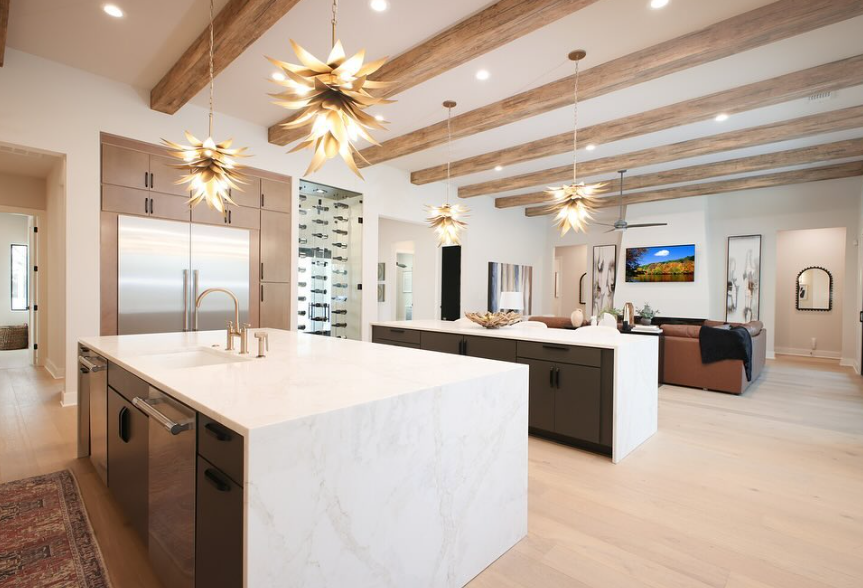
Quartz is engineered and popular for its consistent look and low-maintenance routine. Bellezza notes quartz is valued for durability and easy care, which is why it stays on short lists for family kitchens and new builds. Quartz Countertops: Myths vs. Facts
Where quartz works especially well in waterfall projects:
- Consistent patterning: Helpful when you want a calm, uniform island, or when the design needs to coordinate across multiple countertop runs.
- Daily upkeep: Straightforward cleaning and fewer “special rules” for normal spills.
- Design flexibility: Quartz offers a wide range of styles, including marble-inspired patterns that read clean in open layouts.
Tradeoffs to plan for:
- Direct high heat: Quartz is durable, but most manufacturers recommend avoiding placing hot pans directly on the surface. Build good habits near the cooktop.
- Lighting and reflections: Some polished quartz surfaces can show fingerprints and smudges under strong under-cabinet lighting.
Pro tip: If your island is the main landing zone for groceries and takeout, choose a finish that fits your lifestyle. A slightly softer look can reduce the “constant wipe-down” feeling that some glossy black or high-polish surfaces create.
Waterfall Planning: Seams, Vein Direction, and Support Details
A waterfall can look seamless, but it rarely happens by accident. The big visual win is when the pattern flows from the horizontal countertop down the vertical panel in a way that looks intentional.
Bellezza’s waterfall guide breaks down why layout and execution matter for this style. Waterfall Countertop Installation Pros in San Antonio, TX
Key decisions to make before fabrication:
- Vein direction: Do you want the movement to run along the island length or across it?
- Waterfall “wrap” look: Ask how the fabricator plans to align the top with the side panel at the corner.
- Seam placement: Seams should avoid the main sightline from living areas and seating.
- Support and overhang: Waterfall islands often include seating. Your overhang and support plan should match how the space is used.
Pro tip: Choose your edge profile early. The edge affects safety, durability at corners, and the overall style of the waterfall. This overview helps homeowners compare profiles in plain language: Countertop Edges Explained.
So Which Is the Best Choice: Porcelain Waterfall or Quartz Waterfall?
For many San Antonio remodels, the decision comes down to habits and priorities.
Porcelain may be the better fit if you:
- Cook often and want confidence around everyday heat routines
- Prefer a crisp, modern look with a clean visual face on the waterfall panel
- Want a non-porous surface with straightforward spill management
Quartz may be the better fit if you:
- Want consistent patterning that is easy to coordinate across counters and islands
- Prefer low-maintenance daily cleaning and a wide range of design styles
- Like the look of marble-inspired patterns without the same material behavior as natural stone
Pro tip: Do not decide from a single photo. View slabs in person, and look at them under warm and cool lighting. In San Antonio homes, the same surface can look different at 9 a.m. versus evening lighting.
Let Bellezza Surfaces Help You Plan a Waterfall That Looks Right Up Close
A waterfall island should look clean from every angle, not just straight on. If you are remodeling in San Antonio, TX and trying to decide between a porcelain waterfall countertop and a quartz waterfall, Bellezza Surfaces can help you compare slabs, plan the layout, and nail the details that matter most: edges, seams, and installation.
Reach out to schedule a consultation or request a quote: Contact Bellezza Surfaces or Request a Free Quote.
