
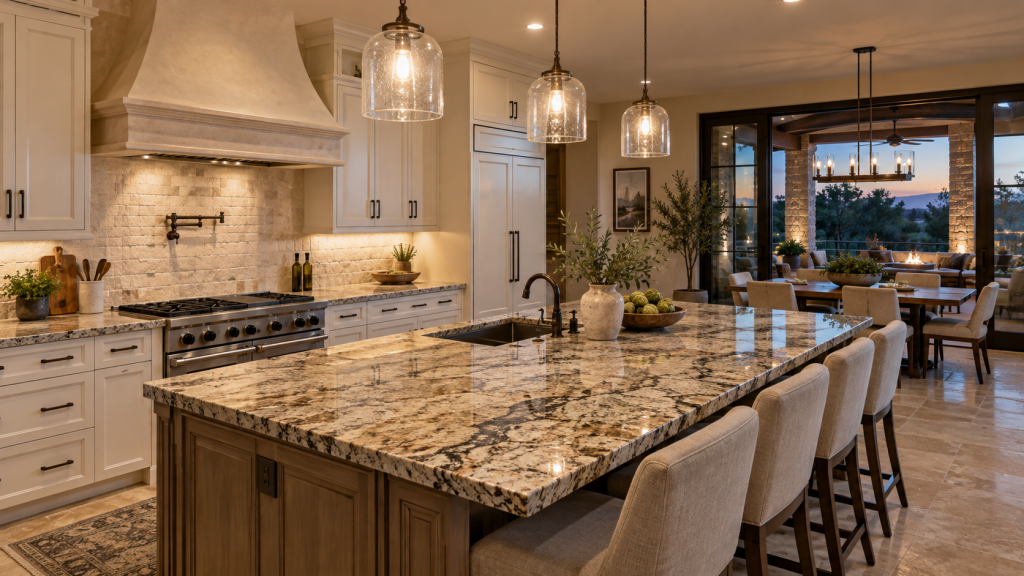
Granite countertops make sense when you want real stone, strong heat resistance, and a slab no one else will have. The tradeoff is simple: granite needs some care, and its natural variation can affect seams, pattern flow, and price. Those details should shape your decision before fabrication, not surprise you after installation. This guide covers the granite countertops pros and cons that matter most, along with what to expect while choosing a slab and living with it.
What Granite Countertops Are and Why Every Slab Looks Different
Granite forms underground as molten rock cools and crystallizes. Its mix of minerals creates the color, speckling, and movement you see across each slab. Because that pattern develops in nature, no two pieces match exactly.
That variation is a major reason people choose granite. It also makes full slab viewing essential. A small sample may show the base color, but it cannot reveal a sweeping mineral line, a concentrated patch of movement, or how the pattern changes from one end to the other.
Look at the actual slab with your cabinet finish, flooring, and other materials in mind. Pay attention to the entire surface, not one photogenic corner. The goal is to choose a slab whose scale and character work across your whole kitchen.
The Advantages of Granite Countertops in a Working Kitchen
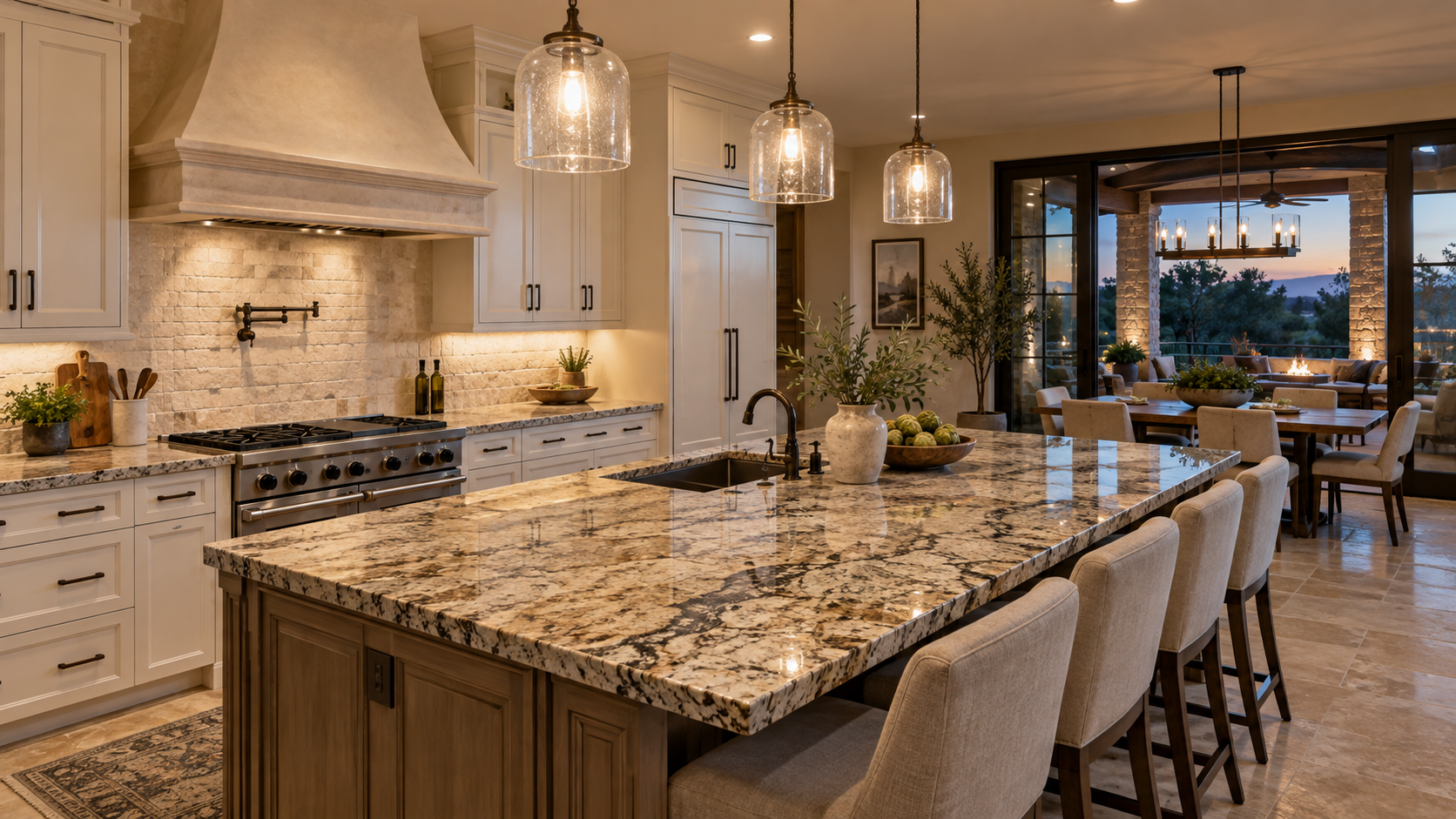
Granite earns its place in active kitchens because it brings genuine visual character without becoming a fragile showpiece.
- Every slab is different. Mineral patterns give the kitchen a surface that feels chosen for the room rather than repeated from a printed design.
- It handles heat well. Granite tolerates normal kitchen heat better than many engineered surfaces. A trivet is still the safer habit because it protects the sealer and reduces thermal stress.
- It resists everyday scratches. Granite holds up well under regular cooking and cleaning, although a cutting board will protect the finish and your knives.
- It can last for decades. Proper installation and basic care give granite a long working life.
- It supports many design directions. Quiet, fine grained slabs can settle into the background. Stronger movement can carry an island or become the room’s focal point.
Granite also suits some outdoor kitchens, where engineered quartz does not. The specific slab, finish, climate exposure, and installation details still need professional review.
The Tradeoffs to Understand Before You Choose Granite
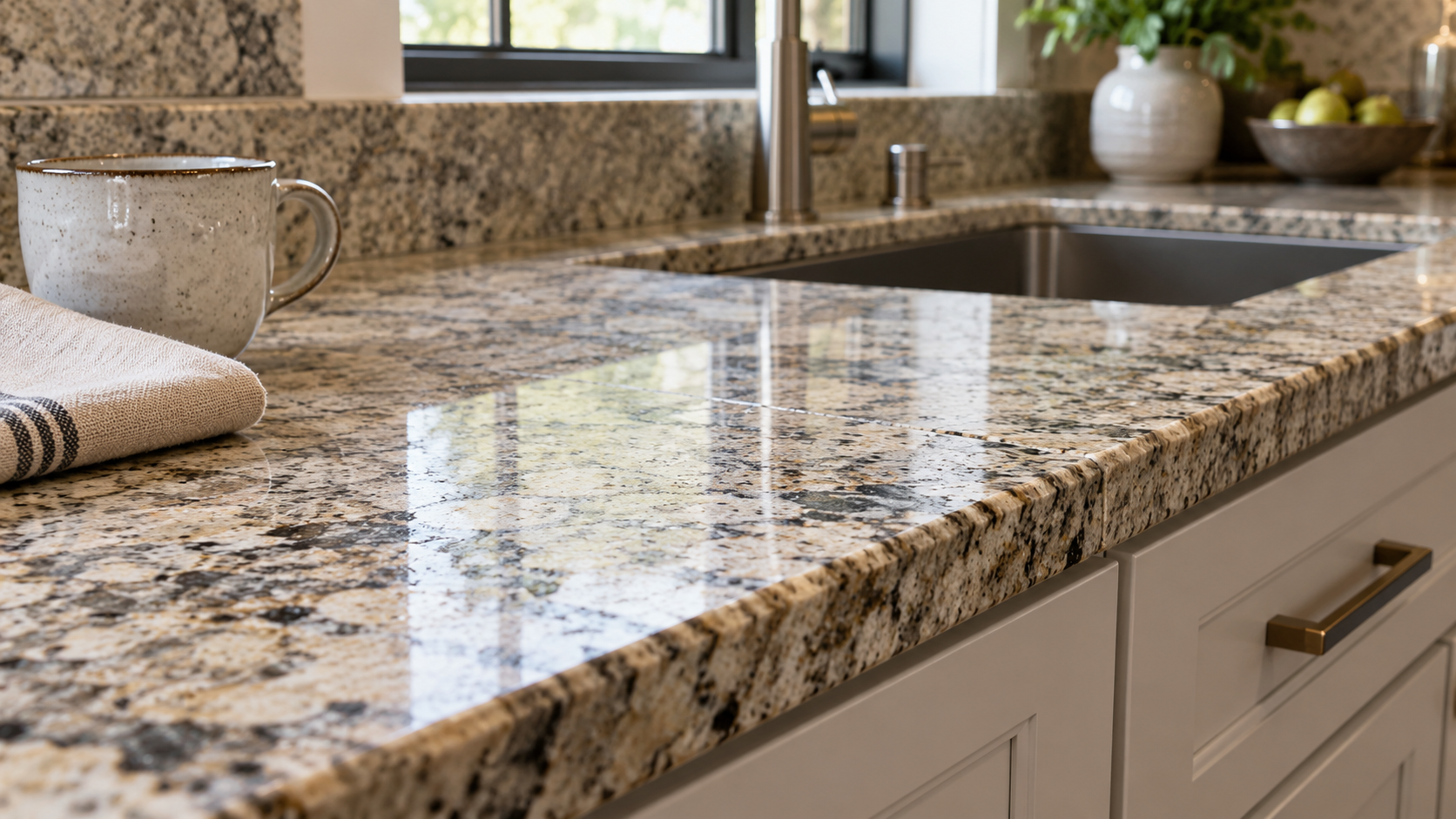
Granite is durable, but it is not stain proof or maintenance free. Most slabs benefit from a penetrating sealer that slows absorption. How often you need to reseal depends on the granite, finish, product used, and how heavily the kitchen is used.
Seams are another practical consideration. A large island or complex layout may require more than one piece. Good planning can place a seam where it feels less disruptive, but no responsible fabricator should promise that every seam will disappear.
Edges deserve care as well. The broad surface resists normal wear, while corners and sink areas can chip after a hard impact. Heavy slabs also need sound cabinets, accurate measurements, and professional handling.
Price can vary widely. Common patterns may be readily available, while rare colors or dramatic movement can increase both material cost and the care required during layout. With granite, the exact slab and the kitchen plan matter more than the category name alone.
What to Expect From Slab Selection Through Installation
Start with the room, not a color name. Bring cabinet samples, flooring, hardware, or clear photos to your slab appointment. These references make it easier to judge undertones and see whether the granite should blend in or lead the design.
Once you select the slab, digital templating captures the finished cabinet dimensions, sink location, cooktop cutout, overhangs, and wall conditions. The fabricator then plans how the kitchen pieces will sit on the slab.
Review that layout before cutting when the granite has strong movement. Ask where seams may fall, how the pattern will turn at corners, and which section will appear on the island. Edge profile and thickness should also be settled at this stage.
Installation brings those choices together. Accurate templating protects the fit. Careful fabrication protects the pattern. Professional placement keeps seams, cutouts, and support details working as one finished surface. See what separates a high end countertop installation.
Is Granite the Right Surface for Your San Antonio Kitchen?
Choose granite if you want natural variation, strong kitchen performance, and a surface with its own mineral character. It is especially compelling when the slab will anchor a large island or connect the kitchen to an outdoor living area.
Quartz may suit you better if you want a controlled pattern and no sealing. Marble or quartzite may be worth comparing when the design calls for a different type of movement or finish.
The best decision happens at full scale. Visit Bellezza in San Antonio to compare granite slabs against your cabinetry, light, and layout before anything is cut. Explore granite countertops in San Antonio or schedule a private design consultation for your project.
Frequently Asked Questions
What Are the Main Pros and Cons of Granite Countertops?
Granite offers one of a kind mineral patterns, strong heat tolerance, good scratch resistance, and a long working life. It also gives buyers a wide range of colors, finishes, and visual movement.
The tradeoffs include periodic sealing, possible seams, natural color variation, and vulnerability around edges after a hard impact. Granite is also heavy and requires skilled templating, fabrication, and installation. It works best for homeowners who value genuine stone and accept some care in return.
How Often Do Granite Countertops Need to Be Sealed?
There is no universal schedule for every granite countertop. Some slabs absorb more than others, and the finish, sealer, cleaning routine, and daily use all affect how long protection lasts.
A simple water test can help. Place a small amount of water on the surface and watch how quickly the stone darkens. Fast absorption may signal that the countertop needs attention. Follow the guidance from your fabricator and sealer manufacturer instead of automatically resealing every year. Read Bellezza’s granite maintenance guidance.
Can Granite Countertops Stain Even When Sealed?
Yes. A sealer slows absorption, but it does not make granite waterproof or stain proof. Oils, wine, coffee, and other spills can still leave a mark if they sit long enough, especially when the sealer has worn down.
Blot spills soon after they happen and clean the surface with mild soap or a cleaner made for natural stone. Avoid harsh acids and abrasive products. Good habits matter more than aggressive cleaning after a stain has already entered the stone.
Can You Put a Hot Pan on Granite?
Granite handles heat well, but a trivet is still the right choice. The stone may tolerate a hot pan, while the sealer can react differently. Sudden temperature changes can also place stress on a cold surface or a vulnerable area near a cutout.
Using a trivet protects the finish and removes a risk that offers no real benefit. Heat resistance should give you confidence in a working kitchen, not a reason to test the slab every night.
Do Granite Countertops Chip or Crack Easily?
Granite does not chip or crack easily under normal kitchen use. Most damage happens after a hard impact at an edge, around a sink or cooktop cutout, or where the surface lacks proper support.
Cabinet condition, overhang support, fabrication, and installation all affect long term performance. Small chips can sometimes be repaired, although the repair may remain visible on certain colors or patterns. Protect exposed corners and address cabinet movement or support issues before they put stress on the stone.
Are Seams Visible in Granite Countertops?
Most seams remain visible if you look closely. Their appearance depends on slab size, kitchen layout, pattern movement, seam location, fabrication, and the adhesive color used during installation.
A thoughtful layout can keep seams away from the strongest visual areas and help movement continue across adjoining pieces. Large or complex kitchens may still need more than one slab. Review proposed seam locations before fabrication, especially when your granite has bold lines or a clear directional pattern.
Is Granite a Good Choice for an Outdoor Kitchen in San Antonio?
Granite can be a strong outdoor option because it handles heat and sunlight better than engineered quartz. The specific stone, finish, sealing needs, cabinet structure, and exposure still matter.
An outdoor counter under a covered patio faces different conditions than one exposed to full sun and rain. Ask your fabricator to review the location and slab before you commit. Engineered quartz should stay indoors because UV exposure can discolor its resin, and manufacturers generally exclude outdoor installations from warranty coverage.
Is Granite Better Than Quartz for a Busy Kitchen?
Granite is the better fit when you value natural variation, stronger heat tolerance, and the character of a real stone slab. Quartz often wins when you want a more consistent pattern, no sealing, and simpler stain care.
Both can handle a busy kitchen when properly fabricated and installed. Your cooking habits, design direction, and willingness to use trivets or monitor sealing should decide the choice. Compare heat and stain resistant countertops for San Antonio homes.
