
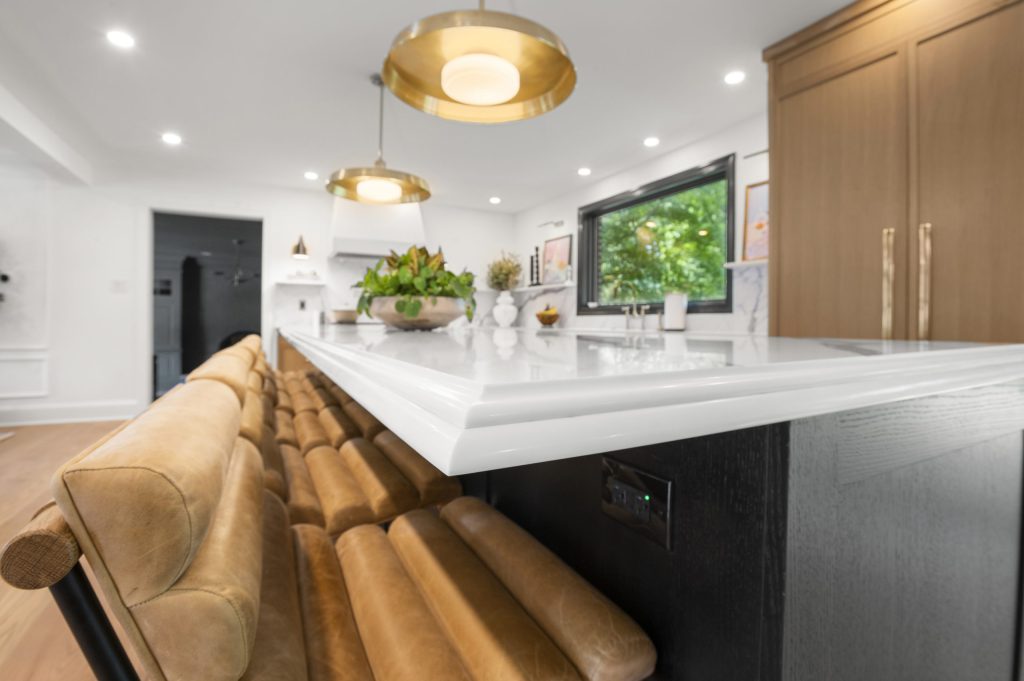
Natural and engineered stone surfaces are more than just a trend—they’re fast becoming the gold standard for upscale kitchens. From quartzite and granite to marble and engineered quartz, homeowners are increasingly investing in stone countertops for their durability, elegance, and lasting value. But what’s driving this shift, and which material is right for your kitchen? Let’s explore why stone surfaces are seeing a surge in popularity.
Beauty Meets Functionality
Homeowners today want more than just a good-looking kitchen. According to the 2024 Houzz U.S. Kitchen Trends Study, 89% of renovating homeowners prioritize durability in their countertop selection. Stone surfaces deliver on this front. Whether it’s the high heat resistance of granite or the low-maintenance appeal of engineered quartz, stone blends beauty with practicality.
Many stone surfaces also offer distinctive veining, coloration, and textures that turn a utilitarian feature into a focal point. For example:
- Quartzite: Harder than granite and highly resistant to wear, with elegant marbling.
- Marble: Classic and luxurious, favored in timeless or European-style kitchens.
- Granite: Naturally varied in pattern and virtually indestructible with proper care.
- Quartz: Engineered to resist stains and scratches, while mimicking natural stone.
Elevated Resale Value
Kitchen countertops are one of the top ROI upgrades during a remodel. A report by the National Association of Realtors (NAR) found that a kitchen upgrade using high-quality materials like stone can recoup over 60% of its cost in added home value.
Buyers recognize the appeal of stone surfaces—they connote long-lasting quality, aesthetic refinement, and low future maintenance. In markets where home values exceed $500K, premium surfaces are often expected rather than optional.
Stone Fits Every Style
While natural stone is often associated with traditional designs, today’s options work equally well in modern, transitional, or industrial spaces. Honed marble, matte granite, and soft-tone quartz all offer clean finishes that complement streamlined cabinetry and minimalist aesthetics.
- Modern homeowners are gravitating toward waterfall edges, full-height backsplashes, and large-format slabs for seamless visual flow.
- Outdoor kitchens and bathrooms are also benefiting from materials like granite and quartzite, which hold up well under the elements.
Sustainability and Longevity
Stone surfaces, especially those quarried domestically or engineered with recycled content, are increasingly viewed as a sustainable choice. Unlike laminate or wood, which may need replacing every 10–15 years, natural stone can last a lifetime with proper care.
Organizations like the Natural Stone Sustainability Standard provide benchmarks for fabricators and suppliers focused on responsible sourcing and long-term performance.
Common Questions When Choosing Stone
Is natural stone harder to maintain than engineered stone?
Yes, some types (like marble) require more maintenance than quartz or porcelain. But many homeowners find the visual payoff worth the effort.
Do I need to seal all stone surfaces?
Not all. Quartz is non-porous and doesn’t require sealing. Granite, quartzite, and marble generally benefit from periodic sealing, depending on use.
Are stone countertops heat and scratch resistant?
Most natural stones like granite and quartzite are very heat and scratch resistant. However, always use trivets and cutting boards to preserve the finish.
Conclusion
Stone surfaces offer a combination of aesthetic beauty, performance, and resale value that few other materials can match. Whether you’re designing your dream kitchen or renovating to sell, choosing the right stone surface can elevate both form and function.
For more guidance on selecting the right countertop material for your home, visit Natural Stone Institute or speak with a local fabricator who understands your specific needs.
Ready to bring the enduring beauty of stone into your kitchen? Contact our team to explore top-quality slabs and expert installation services today.